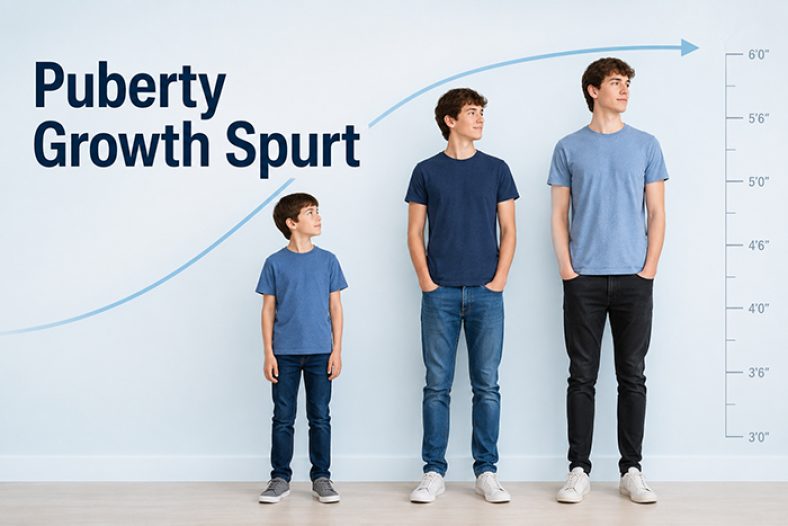
Growth Science
The puberty growth spurt is the single biggest height-gaining window of your life — and also one of the shortest. Knowing when it typically starts, when it peaks, and when it winds down helps you understand what's happening with your body, and where habits like sleep and nutrition can actually still make a difference.
What Is the Puberty Growth Spurt?
The puberty growth spurt is a period of rapid height and weight gain triggered by a surge in growth hormone, sex hormones, and insulin-like growth factor 1 (IGF-1). During this phase, bones lengthen faster than at any other point in life outside of infancy. It's also a time of major change beyond height alone — muscle mass, body composition, voice, and overall body shape all shift as the body matures.
When Does the Puberty Growth Spurt Start?
Timing is largely governed by genetics, but there are well-documented average windows for both sexes. Girls typically enter puberty, and the growth spurt, about two years earlier than boys, which is part of why girls are often taller than boys for a stretch around middle school.
| Group | Spurt Begins | Peak Height Velocity | Spurt Tapers Off |
|---|---|---|---|
| Girls | 8-13 years | ~11-12 years | 14-15 years |
| Boys | 10-15 years | ~13-14 years | 16-17 years |
Starting earlier or later than these averages is usually normal, since the ranges above are wide by design. Persistent delays or unusually early development are the kinds of patterns worth discussing with a pediatrician rather than the timing itself.
When Does the Growth Spurt Peak?
The peak of the growth spurt is called peak height velocity (PHV), the point at which height is increasing fastest. PHV typically occurs about 1 to 2 years after the spurt begins.
These figures vary somewhat by study and population, but consistently show boys peaking only modestly faster than girls, not dramatically faster. A noticeable jump in shoe size, suddenly outgrowing pants, or fast-changing clothing needs are common everyday signs that PHV is happening or has just passed.
How Much Total Height Do You Gain?
Across the entire puberty growth spurt, from start to finish, pediatric growth research puts the totals closer together between the sexes than many popular summaries suggest:
Why boys typically end up taller. It isn't mainly because their growth spurt itself adds dramatically more height. It's mostly because boys start puberty roughly two years later than girls, which means two extra years of steady pre-pubertal growth before the spurt even begins, combined with a modestly higher peak growth rate once it does. Together, these two factors account for most of the average adult height gap between men and women.
When Does the Growth Spurt Slow Down?
After PHV, growth velocity drops noticeably each year. By the late teen years, height gain slows to a trickle and eventually stops as the growth plates close and the bones can no longer lengthen. For most girls, the spurt is essentially complete within about 2 to 3 years of their first period; for boys, height typically plateaus roughly 2 to 3 years after the voice deepens and facial hair fills in.
Signs the Growth Spurt Is Ending
How to Support Healthy Growth During This Window
Genetics can't be changed, but it's possible to avoid losing height that would otherwise have been gained. Three habits matter most during this window:
Nutrition. Adequate protein, calcium, vitamin D, zinc, and overall calorie intake are essential. Skipping meals or chronic under-eating during puberty can blunt growth potential that won't come back later.
Sleep. Most growth hormone is released during deep sleep. Teens generally need 8 to 10 hours per night, and consistent sleep timing matters nearly as much as total duration.
Movement. Weight-bearing and posture-supporting activity supports healthy bone development. See our guide to the best exercises to grow taller for teens for a starting routine.
The bottom line: the puberty growth spurt typically starts around 8-13 for girls and 10-15 for boys, peaks about 1-2 years later, and tapers off in the mid-to-late teens. Contrary to a common assumption, the total height added during the spurt itself is fairly similar between girls and boys; the adult height gap comes mostly from boys' extra two years of pre-pubertal growth. The years leading up to and during this window are when nutrition, sleep, and movement habits make the biggest difference toward reaching genetic potential.
Frequently Asked Questions
How long does the puberty growth spurt last?
The active spurt typically lasts about 2 to 3 years from start to slowdown. After peak height velocity, growth decelerates each year and tapers off as the growth plates close in the mid-to-late teens.
Do girls keep growing after their first period?
Yes, but only a little. Most girls grow another 2 to 3 inches after their first period (menarche) before their growth plates fully close. The biggest height gains happen in the year or two before menarche, not after.
What slows down or stops the growth spurt?
Rising sex hormones, especially estrogen, eventually signal the growth plates to harden into solid bone. Once the plates fully fuse, long bones can no longer lengthen, and height growth ends. Nutrition, sleep, and overall health affect how close a person gets to their genetic potential, but they cannot extend the window itself.
Can you predict when your growth spurt will happen?
Not the exact date, but genetics and family history are strong indicators. If parents and siblings entered puberty early or late, a similar pattern is likely. Doctors can also estimate timing using a bone age X-ray and Tanner stage assessment.
Why do boys end up taller than girls on average?
Mainly two reasons. First, boys start puberty about two years later than girls, giving them more pre-puberty growth time. Second, boys' peak height velocity runs modestly higher than girls'. Combined, these two factors account for most of the average adult height gap between men and women.