Sports & Growth
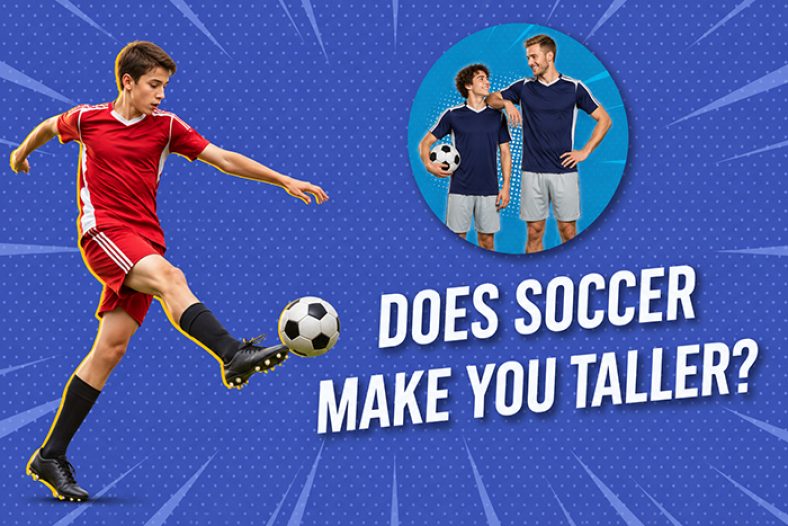
Our sports and bone growth guide ranks soccer among the sports that build bone best. This piece looks at soccer on its own: whether it changes how fast kids grow, why youth soccer teams can look “bigger” than other kids, and the growth-spurt heel pain young players often get.
What Soccer Does and Doesn’t Do
Sprinting, cutting, and sudden stops load bones from many directions, which helps them grow denser and stronger.
Youth players grow at about the same rate as other kids. Height is set mainly by genes, nutrition, sleep, and health.
Players Grow at the Same Rate as Other Kids
A 2025 study followed male Portuguese youth players aged 11 to 18 for five seasons, measuring them every year. Their typical yearly height gains were close to the general population’s, and their average height sat slightly below the reference. Gains varied a lot from player to player, as they do in any group of growing kids.
Taken yearly across five seasons, giving 409 year-to-year growth readings
Close to the general population and to other youth soccer studies
Why Elite Youth Teams Can Look Bigger
Kids born in the same year can be years apart in physical maturity. Researchers note that players of the same age can differ by as much as five to six years in skeletal age. Early maturers are taller, stronger, and faster for now, so elite academies tend to pick them. This is not true of every team: the Portuguese club players above were slightly shorter than average.
Very different maturity levels
Bigger, faster, stronger for now
Teams fill with early bloomers
Gone once everyone is fully grown
In 472 boys at two elite academies, skeletal maturity influenced selection about ten times more than birth quarter, and the effect grew with age.
In an English academy tracked for eight years, more than half of players were born in the first quarter of the selection year, versus about a quarter if birth months were even.
For parents of smaller players: a late bloomer who is cut at 12 may be just as tall as an early bloomer by the end of the teens. If you’re unsure whether a child’s growth is on track, see our guide on when to worry about a child’s height.
The Real Benefit: Stronger Bones
Ball Games Built More Bone Than Regular Gym Class
Bone density gains in Danish children aged 8 to 10 over one school year (FIT FIRST trial)
Growth-Spurt Heel Pain in Young Players
Sever’s disease is irritation of the growth plate at the back of the heel. It is one of the most common causes of heel pain in active, growing kids and shows up often in soccer players, usually around a growth spurt or the start of a new season.
What This Means For You
The practical takeaway: soccer doesn’t make kids taller; young players grow at the same rate as everyone else, and big youth teams mostly reflect who gets picked. Soccer’s real payoff is stronger bones and fitness during the years when bone is being built. To compare soccer with other sports, see our sports and bone growth guide.
Frequently Asked Questions
Does playing soccer make you taller?
No. A study that measured youth soccer players every year for five seasons found their yearly height gains were close to the general population’s. Height is set mainly by genetics, nutrition, sleep, and overall health. Soccer does help build stronger bones and fitness.
Why are some youth soccer players so much bigger than others?
Kids of the same age can be years apart in physical maturity. Academies tend to select boys who mature early because they are temporarily bigger, faster, and stronger. In one study of 472 academy boys, maturity status influenced selection about ten times more than birth month. The size advantage fades once everyone finishes growing.
Is soccer good for kids’ bones?
Yes. In a randomized school trial of 295 children aged 8 to 10, small-sided ball games for 40 minutes three times a week over 10 months raised leg bone density by 7.0%, compared with 4.0% in regular gym class. The trial measured bone, not height.
Can soccer stunt a child’s growth?
There is no evidence that it does. Youth players grew at about the same yearly rate as other children in a five-season study. Heel pain from Sever’s disease is common in young players during growth spurts, but it goes away once the heel growth plate matures and does not come back after that.
What causes heel pain in young soccer players?
A common cause is Sever’s disease, an irritation of the growth plate at the back of the heel. It often appears during a growth spurt or at the start of a season and gets worse with running and jumping. Rest, supportive shoes, and heel pads usually help; see a doctor if your child limps or the pain doesn’t settle.