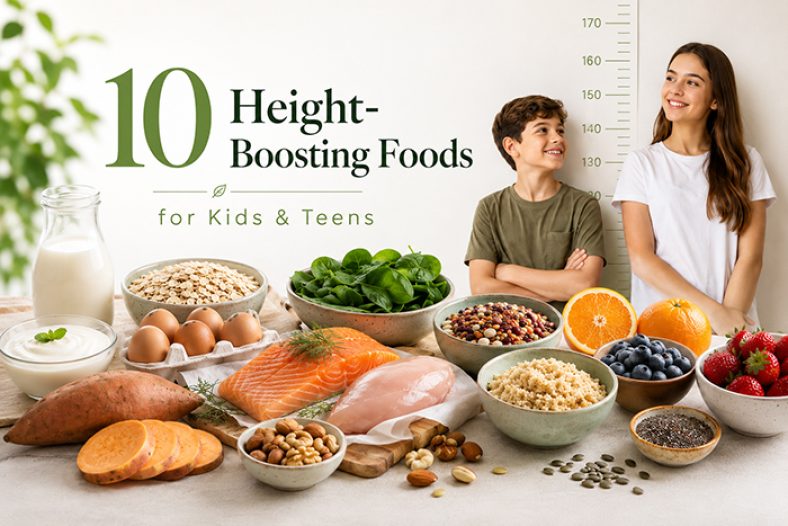
What your child eats during the growth years is one of the few factors you can actually control. These ten foods consistently appear in the research on pediatric bone development, growth hormone activity, and longitudinal growth — here is what they deliver and why they matter.
Why Nutrition Matters for Height
Genetics set the upper limit of a child's adult height — but nutrition determines how close they get to it. Studies comparing children in food-secure and food-insecure environments consistently find that those with adequate, balanced diets grow 2 to 4 centimeters taller on average, even after controlling for genetics.
The mechanism is straightforward. Growth requires raw materials: protein for building new bone and muscle tissue, calcium and phosphorus for bone mineralization, vitamin D to absorb calcium efficiently, zinc for cell division in the growth plate, and iron for oxygen delivery to rapidly growing tissue. A diet consistently short on any one of these blunts the growth process — not catastrophically, but measurably.
The good news: most of these nutrients appear in everyday foods. The ten below are the highest-leverage options for parents trying to close nutritional gaps without overhauling their family's diet.
The 10 Best Height-Boosting Foods
Dairy is the most calcium-dense food group in the typical Western diet. One cup of whole milk delivers roughly 300 mg of calcium — about 30% of a school-age child's daily requirement — along with protein, phosphorus, and vitamin D (if fortified).
Research consistently links dairy consumption in childhood to greater bone mineral density and adult height, particularly in populations where baseline calcium intake is below recommended levels.
Eggs are one of the most complete protein sources available and an important dietary source of vitamin D (from the yolk). One large egg provides 6 g of protein and 44 IU of vitamin D — modest individually, but meaningful when eaten daily.
A study in Pediatrics found that children given one egg per day for six months were 47% less likely to be stunted than the control group, with measurable differences in IGF-1 (insulin-like growth factor), the primary growth hormone mediator.
Fatty fish are the richest natural dietary source of vitamin D — a 3 oz serving of salmon provides 400 to 600 IU, covering the full daily requirement for children in a single meal. They also deliver high-quality protein and omega-3 fatty acids that support bone health.
Sardines are worth highlighting for growing kids: they are eaten with bones, providing calcium alongside vitamin D in a single serving — a rare combination in whole foods.
Chicken is one of the most protein-dense foods available per calorie. A 3 oz serving of cooked chicken breast delivers roughly 26 g of protein — enough to cover more than half of a growing teen's daily protein target in a single serving.
Adequate protein is essential for growth plate activity and muscle development during the peak growth years. It also supports IGF-1 production, the hormonal mediator that translates growth hormone signals into actual bone elongation.
Dark leafy greens are the most nutrient-dense plant foods for bone health. Cooked spinach delivers over 240 mg of calcium per cup, while broccoli contributes vitamin C (critical for collagen synthesis), vitamin K (essential for bone matrix formation), and folate.
Vitamin K2 in particular has emerged in recent research as a key regulator of bone mineralization, directing calcium into bones rather than soft tissue. Leafy greens are among the best dietary sources.
Beans and lentils are among the best plant-based sources of zinc and iron, two nutrients consistently linked to impaired growth when deficient. Iron deficiency is the world's most common nutritional deficiency and frequently goes undetected until growth faltering is already underway.
A cup of cooked lentils provides 6.6 mg of iron and 2.5 mg of zinc, along with 18 g of plant protein. Pairing with vitamin C-rich foods improves non-heme iron absorption significantly.
Whole grains provide sustained energy for growth and meaningful amounts of B vitamins, magnesium, and iron. Quinoa stands out as the only grain that is a complete protein, containing all nine essential amino acids — making it particularly valuable for vegetarian kids.
Oats deliver beta-glucan fiber that supports healthy digestion and steady blood sugar, both of which matter for consistent nutrient absorption over the long growth years.
Almonds are among the highest plant-food sources of calcium (75 mg per ounce) and provide magnesium, which assists calcium absorption. Pumpkin seeds deliver an impressive 2.5 mg of zinc per ounce — one of the most zinc-dense snack foods available.
Both are calorie-dense and easy to add to school meals or after-school snacks, making them practical for busy families trying to close micronutrient gaps without a major diet overhaul.
Vitamin C is essential for collagen synthesis — the structural protein that makes up bone matrix, cartilage, and connective tissue. Without adequate vitamin C, the bone matrix cannot form properly even when calcium and vitamin D are sufficient.
One medium orange provides 70 mg of vitamin C, covering the full daily requirement for children aged 4 to 13. Strawberries, kiwi, and bell peppers are equally rich sources and often more appealing to picky eaters.
Sweet potatoes are one of the richest dietary sources of beta-carotene, which the body converts to vitamin A. Vitamin A is essential for bone remodeling — the continuous process of breaking down old bone and building new bone that drives longitudinal growth.
One medium sweet potato provides over 100% of a child's daily vitamin A requirement. It also delivers vitamin C, potassium, and fiber, making it one of the most nutritionally complete single foods on this list.
Key Nutrients for Height Growth at a Glance
Recommended Daily Intakes by Age Group
| Nutrient | Ages 4–8 | Ages 9–13 | Ages 14–18 |
|---|---|---|---|
| Protein | 19 g | 34 g | 46–52 g |
| Calcium | 1,000 mg | 1,300 mg | 1,300 mg |
| Vitamin D | 600 IU | 600 IU | 600 IU |
| Zinc | 5 mg | 8 mg | 9–11 mg |
| Iron | 10 mg | 8 mg | 11–15 mg |
| Vitamin A | 400 mcg | 600 mcg | 700–900 mcg |
| Vitamin C | 25 mg | 45 mg | 65–75 mg |
Parent takeaway: Calcium requirements spike at ages 9 to 18 — to 1,300 mg/day — which is higher than adult requirements. This reflects the intensity of bone building during the peak growth years. Most children and teens fall well short of this target. Three servings of dairy per day, plus calcium-rich vegetables, covers the gap for most kids without supplementation.
Foods to Limit During the Growth Years
Practical Meal Planning Tips
The Bottom Line
No food makes a child grow taller than their genetics allow. What food does — consistently, across the research — is determine whether a child gets to that ceiling or falls short of it. The ten foods above are not superfoods in the marketing sense. They are the best everyday sources of the five nutrients most consistently linked to healthy growth in children and teens.
Build meals around these foods most days, limit the dietary patterns that work against growth hormone and calcium retention, and ensure your child gets adequate sleep and physical activity alongside good nutrition. That combination covers the modifiable factors almost completely.
Frequently Asked Questions
Can food alone make my child grow taller?
Food cannot override genetics, but chronic nutritional deficiencies can meaningfully reduce the height a child achieves within their genetic range. Adequate nutrition ensures a child reaches — rather than falls short of — their genetic ceiling. The largest differences are seen in children who were previously undernourished and then gain access to adequate diets: catch-up growth of 2 to 5 cm is well-documented in the literature.
Does drinking milk make you grow taller?
Milk provides calcium, protein, phosphorus, and (if fortified) vitamin D — all nutrients essential for bone development during childhood. Multiple large studies have linked regular dairy consumption to greater bone mineral density and, in some populations, greater adult height. However, the effect is strongest in children with below-average calcium intake; well-nourished children in high-dairy societies see smaller marginal gains from additional dairy.
What is the most important nutrient for height growth?
There is no single most important nutrient — height growth requires an adequate supply of several nutrients simultaneously. That said, protein and calcium tend to be the most commonly deficient in children who experience growth faltering in high-income countries. Vitamin D deficiency is also extremely common globally and significantly impairs calcium absorption even when calcium intake is adequate.
Are height-growth supplements necessary if my child eats well?
For children eating a varied, balanced diet that includes dairy, protein, vegetables, and whole grains consistently, supplementation is generally unnecessary. The situations where supplements may add value include diagnosed deficiencies, children with dairy allergies or strict vegan diets (calcium, vitamin D, B12, zinc), and children in growth spurts with unusually high nutrient demands. A pediatrician can assess this with a simple blood panel.
How much protein does a growing teen need per day?
The Recommended Dietary Allowance for protein is 34 g/day for ages 9 to 13, rising to 46 g/day for teen girls and 52 g/day for teen boys aged 14 to 18. Active teens and those in peak growth spurts may need modestly more. A breakfast with two eggs, a chicken sandwich at lunch, and a dinner with beans or fish covers these targets comfortably without protein shakes or supplements.