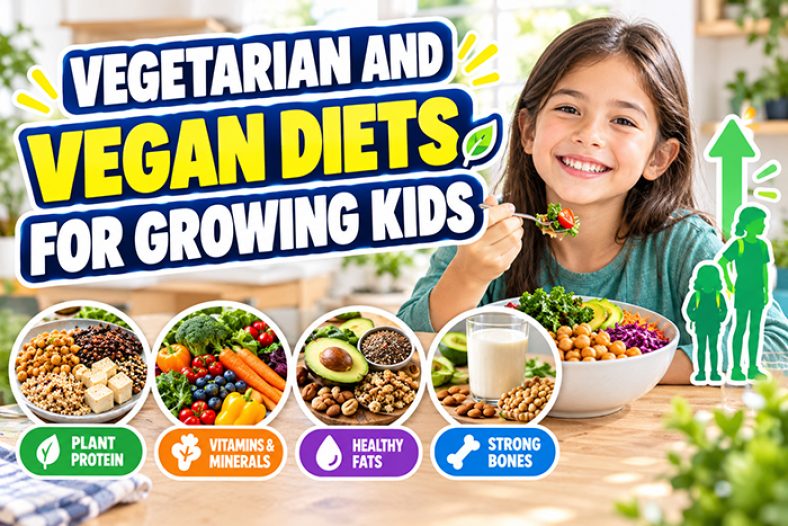
Nutrition & Growth
Our vitamins and nutrients guide covers what growing bodies need, and our vitamin B12 guide explains why plant-based households need a plan for that nutrient in particular. This piece looks at the bigger question families ask when a child eats little or no meat: can a vegetarian or vegan diet support normal growth? It covers what the largest studies found, why vegetarian and vegan diets carry different risks, where expert groups agree and disagree, and which nutrients need the most attention.
How Plant-Based Kids Compared With Meat-Eating Peers
Key risk comparisons from two of the largest studies of vegetarian and vegan children
Vegetarian and Vegan Aren't the Same for Growth
A child who skips meat and fish but eats dairy and eggs has ready sources of vitamin B12, calcium, and high-quality protein. Iron and zinc still need attention.
With no animal foods at all, vitamin B12 must come from fortified foods or a supplement, and calcium, vitamin D, protein, and energy take more deliberate planning.
That distinction matters when reading the research. Most studies of "vegetarian" children include few vegans, and their reassuring findings don't automatically extend to fully plant-based diets. Vitamin B12 is the clearest example: it occurs naturally almost only in animal foods, so a vegetarian child who eats eggs and dairy usually gets enough, while a vegan child needs a fortified food or supplement. Our B12 guide covers sources and signs of deficiency.
What the Research Shows
Studies of plant-based diets in children are fewer and smaller than parents might expect. Two stand out for their size and detail.
The Canadian study, published in Pediatrics in 2022, followed children in the TARGet Kids! primary care network for an average of 2.8 years. Of 8,907 children, 248 were vegetarian at the start, including 25 vegans. The researchers found no clinically meaningful differences in BMI, height for age, iron stores, vitamin D levels, or cholesterol between vegetarian and non-vegetarian children, and no link to overweight. The one difference was underweight: vegetarian children had 1.87 times the odds of a BMI below the 3rd percentile. The authors concluded that vegetarian diets appear appropriate for most children, while underscoring the need for careful dietary planning, especially for children who are already underweight.
The Polish study, published in the American Journal of Clinical Nutrition in 2021, examined 187 children aged 5 to 10: 63 vegetarians, 52 vegans, and 72 omnivores. Vegan children were on average about 3 cm shorter and had lower bone mineral content even after accounting for their smaller size, by 3.7% for the whole body excluding the head and 5.6% at the lower spine. Vitamin B12 deficiency, iron-deficiency anemia, and low iron stores were more common in vegans. On the other hand, vegans had less body fat and the lowest rate of high LDL cholesterol. The researchers linked the bone and vitamin findings to lower intakes of protein, calcium, and vitamins B12 and D, and stressed the need for B12 and vitamin D supplements on plant-based diets. Vegetarian children showed fewer nutritional deficiencies but, unexpectedly, a less favorable cardiometabolic profile.
What these studies can and can't tell us. The Polish study was a single snapshot of a relatively small group, so it shows associations rather than proving the diet caused the differences, though the authors adjusted for family circumstances, early growth, and activity. The Canadian study was large and followed children over time, but included only 25 vegans, so it says little about fully plant-based diets. Neither study tells us how carefully each family planned its diet. Taken together, they suggest that plant-based diets can support normal growth, and that the risks rise as more food groups are excluded without a plan to replace their nutrients.
Where Expert Groups Agree and Disagree
Professional organizations don't all say the same thing about vegan diets for children, which is part of why parents get mixed messages.
Appropriately planned vegetarian and vegan diets suit all life stages, including childhood
Did not recommend vegan diets for children or adolescents
Data too limited to recommend for or against for children
Careful planning and B12 supplementation are essential
The Academy of Nutrition and Dietetics' 2016 position holds that appropriately planned vegetarian, including vegan, diets are healthful and nutritionally adequate for all stages of life, including infancy, childhood, and adolescence. The German Nutrition Society took a more cautious view, recommending against vegan diets for children in 2016. In its 2024 update, it moved to a neutral position, saying it could not make a clear recommendation for or against vegan diets in children and adolescents because of limited data. The word that shows up in every position is the same: planned. None of these groups suggests that simply removing animal foods, without replacing what they provide, is safe for a growing child.
Nutrients That Need a Plan
Growth checks are the best report card. Whatever a family's diet, steady growth along a child's own percentile line is the clearest sign that energy and nutrients are adequate. The Canadian researchers emphasized access to health care providers who can monitor growth and offer nutrition guidance for vegetarian children. If height or weight starts to drift downward, or a child seems unusually tired or pale, that's a reason to review the diet and check blood levels. Our height percentile guide explains how to read the growth curve.
What This Means For You
The practical takeaway: a well-planned vegetarian diet appears compatible with normal growth for most children, though vegetarian kids are somewhat more likely to be underweight. Vegan diets can work but demand more planning: in one study, vegan children were about 3 cm shorter with lower bone mineral content and more vitamin B12 and iron deficiency, despite a healthier cholesterol profile. Expert groups differ on vegan diets for children, but all stress careful planning and reliable B12. To dig into individual nutrients, start with our vitamins and nutrients guide.
Frequently Asked Questions
Can a vegetarian diet stunt a child's growth?
The best available evidence suggests it doesn't for most children. A Canadian study of 8,907 children found no meaningful differences in height, BMI, iron stores, or vitamin D levels between vegetarian and non-vegetarian children. Vegetarian children did have nearly twice the odds of being underweight, so careful planning and growth checks still matter.
Are vegan children shorter?
In a Polish study of children aged 5 to 10, vegan children were on average about 3 cm shorter than omnivores and had 4% to 6% lower bone mineral content. They also had more vitamin B12 deficiency and iron-deficiency anemia, but less body fat and better cholesterol levels. The study was small and cross-sectional, so it can't prove the diet caused the differences.
Do vegan kids need a B12 supplement?
Yes. Vitamin B12 occurs naturally almost only in animal foods, so vegan children need fortified foods or a supplement. The authors of the Polish study stressed the need for B12 and vitamin D supplementation on plant-based diets. Vegetarian children who eat dairy and eggs usually get enough B12 from those foods.
Do experts say vegan diets are safe for children?
Opinions differ. The Academy of Nutrition and Dietetics says appropriately planned vegetarian and vegan diets are suitable for all life stages, including childhood. The German Nutrition Society, which previously advised against vegan diets for children, said in 2024 that data are too limited to recommend for or against them. Both emphasize careful planning.
Which nutrients should parents of plant-based kids watch most?
Vitamin B12 comes first for vegan children. Calcium, vitamin D, iron, zinc, protein, and total calories also need attention, since lower intakes of several of these were linked to lower bone mineral content and deficiencies in vegan children. Regular growth checks and blood tests when needed help confirm the diet is working.