Growth Science
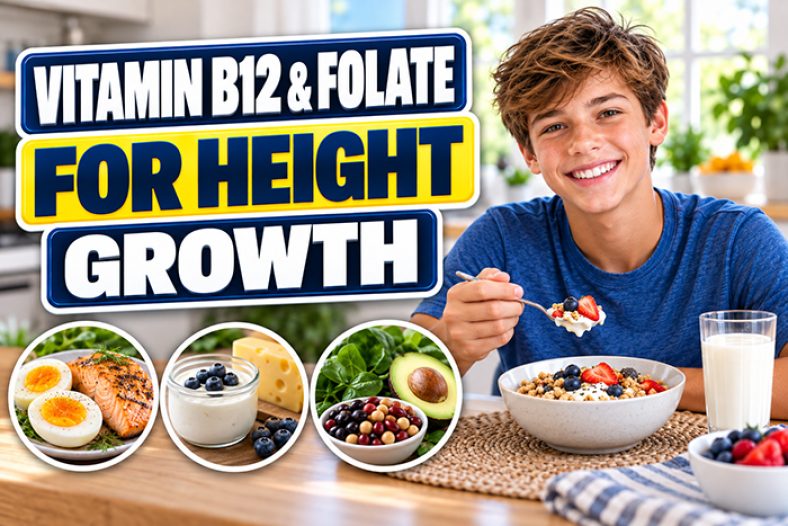
Our zinc guide covers one nutrient tied directly to cell division at the growth plate. Vitamin B12 and folate are the other major cell-division pair on this site — and, like zinc, they turn out to be a case where the honest evidence is more nuanced than a simple "get more, grow more" story.
Why B12 and Folate Matter for Growth
Vitamin B12 and folate are metabolically linked: both are required cofactors in the same biochemical pathway that produces DNA and supports the rapid cell division underlying all tissue growth, bone included. Because they work together in this pathway, a shortfall in one often shows up alongside a shortfall in the other, and researchers typically study them as a pair rather than in isolation. According to the National Institutes of Health's Office of Dietary Supplements, vitamin B12 is needed to make DNA and to keep blood and nerve cells healthy, while folate is needed for the same DNA synthesis and cell division process. Deficiency in either can produce megaloblastic anemia — a condition where the body makes abnormally large, immature red blood cells because DNA synthesis can't keep pace with cell division.
The Trial Evidence: Real, But Genuinely Mixed
This is one of the few nutrient pairs on this site with direct randomized trial data on child growth, rather than mechanism-only reasoning — and the two largest trials reached different conclusions.
These two trials, from overlapping research teams, genuinely disagree — and that's worth sitting with rather than smoothing over. Both were well-designed, randomized, placebo-controlled studies in at-risk populations. The 2020 Nepal trial's own authors concluded their findings do not support widespread vitamin B12 supplementation in marginalized infants, despite clearly improving B12 status biomarkers. The honest summary: correcting a real B12 shortfall reliably fixes the shortfall itself, but a measurable height or weight benefit doesn't reliably follow, even in genuinely at-risk children. This is a more uncertain evidence picture than several other nutrients on this site.
B12 Sources: Why Vegan Diets Need a Plan
Unlike folate, which is available across a wide range of plant foods and fortified grains, vitamin B12 is found almost exclusively in animal-derived foods — meat, fish, eggs, and dairy. Plant foods contain no naturally occurring B12 unless fortified. This makes B12 the more realistic gap risk of the two nutrients, particularly for strictly vegan children.
For a strictly vegan child, a fortified food source or supplement for B12 is generally necessary rather than optional — the body's B12 stores can take months to years to deplete, which is part of why deficiency in vegan children sometimes isn't caught until it's already fairly advanced. A vegetarian child who eats eggs and dairy typically has a reliable B12 source without needing to think about it further.
Signs of Deficiency Worth Knowing
| Sign | What It Reflects |
|---|---|
| Fatigue, pale skin | Megaloblastic anemia — abnormally large, immature red blood cells that carry oxygen less effectively. |
| Poor appetite, slowed growth | Reduced cell division broadly affects tissue growth, not just blood cells. |
| Numbness or tingling (B12 specifically) | B12 is also needed for nerve myelination; deficiency can cause neurological symptoms that folate deficiency alone does not. |
| Irritability, developmental delay | Both nutrients support normal neurological development, especially in infancy. |
How Much Do Kids Need?
| Age | Vitamin B12 RDA | Folate RDA |
|---|---|---|
| 1–3 years | 0.9 mcg | 150 mcg DFE |
| 4–8 years | 1.2 mcg | 200 mcg DFE |
| 9–13 years | 1.8 mcg | 300 mcg DFE |
| 14–18 years | 2.4 mcg | 400 mcg DFE |
DFE = Dietary Folate Equivalents, a measure that accounts for folic acid from fortified foods being more bioavailable than folate naturally occurring in food.
What This Means in Practice
The practical takeaway: B12 and folate are genuinely necessary for normal growth at the cellular level, but the evidence for supplementation adding measurable height is more uncertain here than for several other nutrients on this site — two well-designed trials in at-risk children reached different conclusions. For most families, the practical focus should be making sure B12 sources are reliably present in the diet — automatic for children eating meat, fish, eggs, or dairy, and a genuine planning point for strictly vegan households.
Frequently Asked Questions
Do B12 and folate supplements actually help kids grow taller?
The evidence is mixed. One randomized trial found a modest height and weight benefit in malnourished children, specifically those who were wasted, underweight, or stunted. A separate, more recent trial in marginally stunted infants found no growth benefit at all over a full year of supplementation, despite clearly improving B12 status. Correcting a confirmed deficiency has other clear benefits regardless of the height question.
Should vegan or vegetarian kids take a B12 supplement?
For strictly vegan children, yes — B12 occurs almost exclusively in animal foods, and a fortified source or supplement is generally necessary rather than optional. Vegetarian children who eat eggs and dairy typically get adequate B12 without supplementation.
Is folate deficiency a common concern in the US?
Not particularly, because enriched breads, flours, cereals, and pasta have been fortified with folic acid by US regulation since 1998. Isolated folate deficiency is uncommon in children eating a typical American diet that includes any grain products.
How can I tell if my child might be low on B12?
Fatigue, pale skin, poor appetite, and slowed growth are common but nonspecific signs. Numbness or tingling is a more specific sign of B12 deficiency in particular, since B12 (unlike folate alone) is also needed for nerve health. A blood test can confirm status if there's any concern.
What's the difference between vitamin B12 and folate?
They work in the same metabolic pathway for DNA synthesis and cell division, which is why deficiency in one often overlaps with the other. The key practical difference is source: B12 comes almost exclusively from animal foods, while folate is broadly available in vegetables, fruits, legumes, and fortified grains.